Is Loft Living in St. Louis City the Right Fit?
June 18, 2026
June 18, 2026
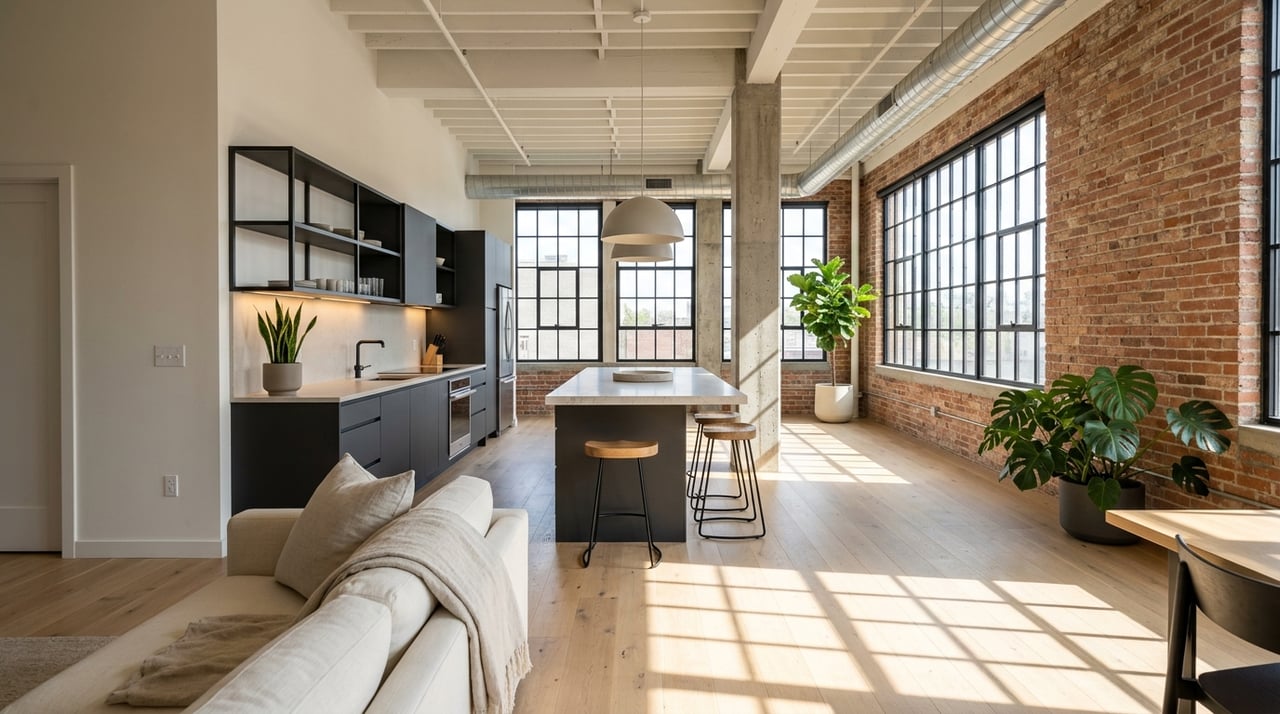
If you are drawn to exposed brick, tall ceilings, and a front-row seat to city life, loft living in St. Louis City can feel like a perfect fit. It offers a very different experience from a traditional single-family home or newer condo, and that difference matters when you are deciding where and how you want to live. Understanding the lifestyle benefits and the practical tradeoffs can help you choose with confidence. Let’s take a closer look.
Loft living in St. Louis City is closely tied to the city’s history. Many of the best-known loft buildings came from former warehouses and industrial buildings that were converted into housing and mixed-use spaces. That adaptive-reuse story gives these homes much of their charm, but it also means no two buildings feel exactly the same.
Washington Avenue is the clearest example. The corridor runs from Eads Bridge to 18th Street and is known for its late-19th- and early-20th-century warehouse architecture, along with a mix of residential lofts, offices, boutiques, restaurants, and nightlife. If you are looking for the classic St. Louis loft feel, this area often defines the conversation.
Downtown and Downtown West shape much of the broader loft market. Downtown stretches from the Mississippi River to Chouteau, Tucker, and Cole, while Downtown West sits just to the west between Tucker, Cole, Jefferson, and Chouteau. Nearby districts like Midtown, Grand Center, and Laclede’s Landing also influence the lifestyle, adding arts, dining, entertainment, and historic character.
One of the biggest draws of loft living is convenience. Downtown St. Louis is laid out on a square grid, and many major attractions are within eight to ten blocks of the Convention Center. That makes it easier to live with fewer car trips than you might expect in many other parts of the region.
Depending on your building and routine, you may be able to walk to parks, restaurants, events, and everyday destinations. Citygarden, Kiener Plaza, Washington Square Park, Union Station, the Old Courthouse, and the Gateway Arch are all part of the downtown experience. If you enjoy being able to step outside and get right into the rhythm of the city, that can be a major advantage.
Transit access is another strength. MetroLink runs across 46 miles and 38 stations seven days a week, with downtown stops that include 8th & Pine, Convention Center, Laclede’s Landing, Civic Center, and Union Station. Washington Avenue also has two underground MetroLink stations, which supports a more connected and flexible daily routine.
For buyers who like biking, downtown also offers useful infrastructure. Washington Avenue includes a shared-use bike lane, and the Downtown Bicycle Station at 10th and Locust provides secure access, bike racks, showers, and locker rooms. That is a practical perk if you want more transportation options beyond driving.
Lofts often attract buyers who want a home with personality. In St. Louis City, that usually means preserved industrial details, large windows, open layouts, and a sense of scale that can be hard to find in more conventional housing. The building itself often becomes part of the home’s appeal.
That said, character usually comes with variety. Since these homes are typically in converted historic buildings rather than purpose-built new construction, one loft building can differ significantly from the next in layout, finishes, management style, and amenities. A beautiful exterior or dramatic living room does not always tell you how the building functions day to day.
This is why loft shopping tends to be more building-specific than many buyers expect. You are not just buying square footage. You are also choosing a particular conversion, a particular association structure, and a particular style of urban living.
For many buyers, loft living is about more than the unit itself. It is about what happens when you walk out the door. Downtown and nearby districts offer a strong mix of dining, entertainment, and cultural destinations that can shape your everyday routine.
Washington Avenue has long been associated with restaurants, shops, and nightlife. Grand Center serves as the city’s main arts-and-entertainment district, and Laclede’s Landing brings together historic architecture, cobblestone streets, restaurants, sidewalk dining, bars, and late-night activity. Attractions like Busch Stadium also add to the event-driven energy of the area.
That access can be a real lifestyle upgrade if you want your home base to feel active and central. You may be able to meet friends for dinner, attend a show, or spend time in a downtown park without planning your whole day around driving. For the right buyer, that kind of convenience is hard to beat.
Loft living is not just about style. It is also about priorities. The same features that make lofts appealing can create compromises that matter depending on how you live.
Storage is one of the most common examples. Because many lofts were created from warehouses and manufacturing buildings, the emphasis is often on open volume, tall windows, and historic texture rather than highly segmented rooms and generous built-in storage. That means closet space, pantry space, laundry setup, and extra storage should be reviewed unit by unit.
Noise is another realistic consideration. Areas with restaurants, nightlife, theaters, sports venues, and event traffic can feel livelier than neighborhoods built around primarily residential use. Some blocks may feel noticeably more active in the evenings or during major events.
Parking also deserves attention. The city offers downtown and Midtown garages, along with a surface lot, and on-street parking is handled through Parkmobile. Meters generally have a two-hour limit, and off-street parking is often the better option for longer stays, so you will want to understand exactly what your building offers and what daily parking would look like for you and your guests.
In St. Louis loft districts, the neighborhood matters, but the building often matters even more. Since the housing stock varies so much, buyers should avoid assuming every loft comes with the same mix of amenities, rules, or maintenance standards. Two units a few blocks apart can deliver very different ownership experiences.
Some buildings may place more value on private parking, common areas, or storage options. Others may offer fewer extras but make up for it with stronger architectural details or a more central location. The key is to compare what you are actually getting, not what the word “loft” suggests in general.
Historic buildings also call for careful due diligence. Washington Avenue’s revival included preserved architecture, improved sidewalks, custom lighting, and streetscape work, but older buildings can still have building-specific conditions that deserve close inspection. That makes a thoughtful review of the property, not just the floor plan, especially important.
Many St. Louis City lofts are condominium-owned, so the ownership structure is a major part of your decision. In Missouri, the recorded declaration identifies the condominium and association, and the property is administered according to recorded bylaws. Those documents are not just technical paperwork. They shape how the building operates.
Missouri law generally places responsibility for common element maintenance, repair, and replacement on the association, while unit owners are responsible for their own units. That division can affect what you are expected to maintain, what the association handles, and how building costs are shared over time.
Associations may also impose charges for late payments and can levy reasonable fines for violations of the declaration, bylaws, and rules after notice and an opportunity to be heard. In practical terms, that means dues, rules, and enforcement can vary from one building to another. Before you buy, it is wise to review the declaration, bylaws, and rules closely so you understand assessments, common elements, owner obligations, and any limits on how you can use the property.
Loft living often works best for buyers who value centrality, architectural character, and a lower-maintenance ownership style. If you like being close to transit, parks, entertainment, and dining, the tradeoffs may feel well worth it. The appeal is strongest when you want your home and your city experience to feel closely connected.
At the same time, loft living may require flexibility. You may be trading some storage, a quieter setting, or easier parking for walkability and urban energy. The right fit comes down to how you weigh those priorities in your daily life.
If you are considering a loft in St. Louis City, it helps to look beyond the listing photos and focus on the full picture. Building rules, layout function, parking, noise, and day-to-day convenience can have just as much impact as exposed brick and high ceilings. A thoughtful comparison can help you choose a property that supports both your style and your routine.
If you are exploring lofts in St. Louis City and want clear, neighborhood-specific guidance, Susan Hurley Homes can help you evaluate the lifestyle, the building details, and the practical fit for your next move.
Stay up to date on the latest real estate trends.
We’re more than a team of real estate professionals — we’re your partners in every step of the journey. Whether buying, selling, or relocating in St. Louis, our expertise, market insight, and dedication ensure a seamless experience and outstanding results.