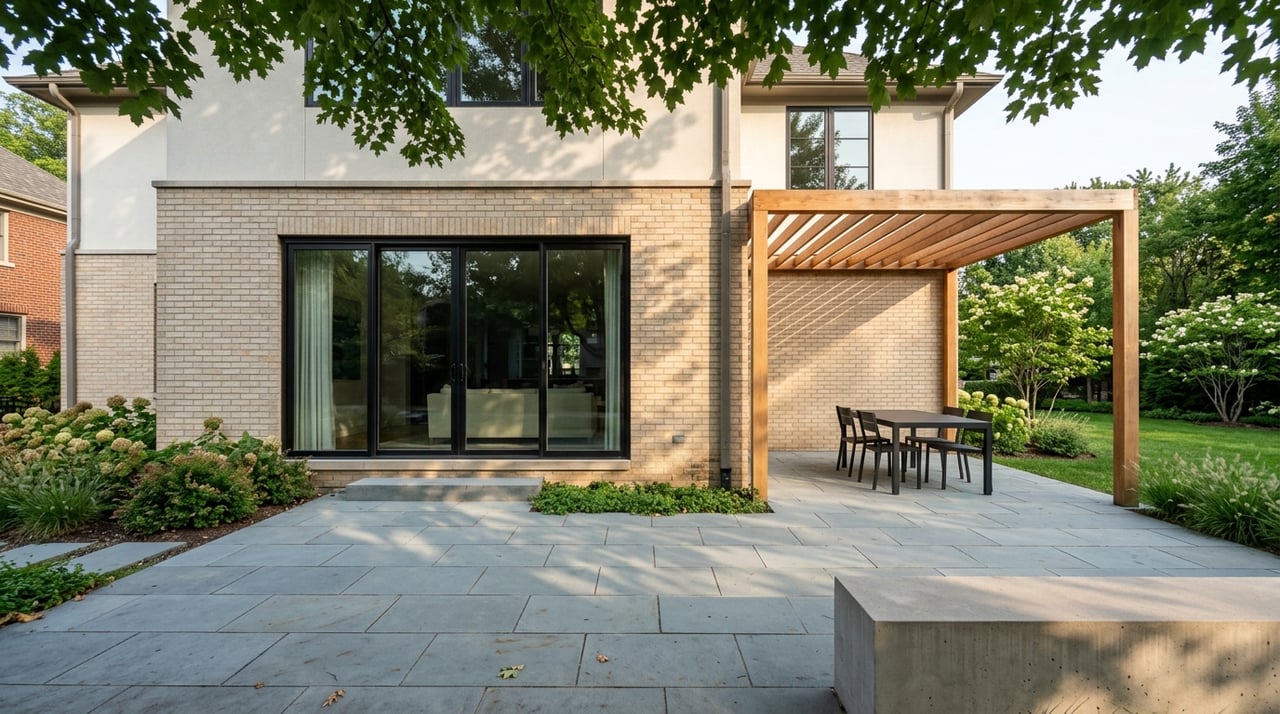
Your Guide to Chesterfield MO Neighborhoods
May 28, 2026
May 28, 2026
If you are planning a move to Chesterfield, one of the biggest surprises is how different one part of the city can feel from another. Some areas lean toward classic subdivision living, while others offer larger estate-style lots, newer mixed housing, or a more walkable, mixed-use setting. When you understand those patterns first, it becomes much easier to focus your search and choose a neighborhood that truly fits your daily life. Let’s dive in.
Chesterfield is not one uniform housing market. City planning materials describe it through several character areas, including suburban neighborhoods, mixed residential areas, neighborhood centers, regional commercial areas in Chesterfield Valley, and a city center concept built around walkability and mixed use.
That matters because comparing Chesterfield by overall setting and housing type is often more helpful than comparing by street name alone. If you begin with the kind of lifestyle you want, you can narrow your options much faster and with more confidence.
For many buyers, the classic Chesterfield experience starts with traditional suburban subdivisions. The city describes these areas as neighborhoods of single-family homes with more uniform housing densities.
Chesterfield’s bike and walk planning also notes that many residential streets were built in curving subdivision layouts with cul-de-sacs rather than on a citywide grid. In practical terms, that often means a quiet residential feel, but walkability can vary quite a bit from one subdivision to another.
This type of neighborhood can be a strong fit if you want a detached home and a more familiar suburban layout. It can also work well if your top priority is interior neighborhood living rather than being close to the busiest mixed-use or retail areas.
When you compare these neighborhoods, pay attention to how the streets connect to main roads, parks, and nearby errand stops. Two subdivisions may look similar on paper but feel very different once you consider daily convenience.
If your wish list includes a larger lot, more privacy, and a more scenic setting, the Wild Horse Creek Road corridor deserves a close look. City planning documents note that the Wild Horse Creek Road Overlay District is intended to preserve the scenic character of the corridor.
Recent planning materials in that area show estate-style lot patterns, including lots ranging from about 15,000 to nearly 22,000 square feet, along with plats featuring 90-foot and 110-foot-wide lots. That makes this part of Chesterfield especially relevant for buyers who want more space around the home.
This area tends to appeal to buyers who want a more landscaped setting and a little more separation between homes. If privacy and lot size rank high on your list, this is one of the clearest neighborhood patterns in Chesterfield to compare first.
It is also smart to ask about any overlay district requirements, easements, or HOA rules that could affect how you use or maintain the property. Those details can shape how a larger lot lives day to day.
Not every buyer wants a large yard or a fully traditional subdivision. Chesterfield also includes mixed residential areas, where planning guidance emphasizes buffering, transitional landscaping, setbacks, and open space between uses.
These parts of the city can offer a different kind of balance. They may provide newer and more compact housing choices while still keeping some separation from surrounding uses.
A recent proposal at 14001 Olive Boulevard shows the kind of housing that can appear in these settings: single-family detached homes, single-family attached units, private roads, sidewalks, pocket parks, and a nature trail. That mix is useful to keep in mind if you want something newer or more manageable without jumping all the way into a downtown-style environment.
For some buyers, this can be a sweet spot. You may get newer construction patterns, some shared amenities, and a housing style that supports a lower-maintenance lifestyle.
If you want the most urban, mixed-use feel available within Chesterfield, focus on the city center areas. The city’s planning documents describe this concept as a compact, walkable downtown with mixed residential and non-residential uses, multiple stories, and pedestrian-oriented blocks.
Wildhorse Village is also identified as a City Center and Urban Transition area, and the Chesterfield Mall area has been flagged as a key future land-use and redevelopment area. For buyers who want a more connected, activity-rich setting, this part of Chesterfield stands out.
This area may be especially appealing if you want easier access to dining, errands, and recreation in one general part of the city. It is also worth comparing if you prefer attached housing or a more lock-and-leave style of living.
Compared with estate corridors or interior subdivisions, this part of Chesterfield offers a different rhythm. The tradeoff may be less yard space in exchange for a more walkable and amenity-rich setting.
Chesterfield’s transportation pattern is closely shaped by I-64/US-40 and Route 141. City planning materials note that I-64 runs through the north portion of the city while Highway 141 sits on the east side.
That makes location near these corridors especially important if commute time and regional access are major factors in your move. The city has also noted active I-64 and Route 141 interchange improvements, which adds another layer to how buyers may compare convenience across neighborhoods.
If you expect to travel often across the St. Louis region, neighborhoods with easier access to these routes may deserve extra attention. A home that feels slightly less central on a map can still be highly practical if it connects well to the highways you use most.
You should also consider your dependence on local connector roads such as Chesterfield Parkway, Wild Horse Creek Road, Schoettler Road, and Old Baxter Road. Daily driving patterns can shape your quality of life as much as the home itself.
Neighborhood feel is not only about housing. In Chesterfield, parks, trails, and amenity clusters can play a major role in how convenient and enjoyable an area feels.
The city lists a broad network of parks and trails, including Central Park, Chesterfield Valley Athletic Complex, Eberwein Park, Logan Park, Railroad Park, River’s Edge Park, Veterans Honor Park, and W. F. Dierberg Meditation Park. These amenities can be important tie-breakers when you are choosing between similar homes.
One of the most concentrated amenity clusters is around Central Park. The city’s trail map places the amphitheater, aquatic center, Chesterfield Mall, the family YMCA, the Sachs Branch Library, and Veterans Honor Park in the same general area near Wild Horse Creek Road and Chesterfield Parkway West.
If you want parks, recreation, errands, and activity close together, this corridor is one of the most useful places to compare. For many buyers, convenience here goes beyond shopping and includes how easy it is to fit recreation into everyday life.
River’s Edge Park adds fishing and trail access, while Eberwein Park includes a dog park, community gardens, a native prairie, and a trail. Those features can make one part of Chesterfield feel much more aligned with your lifestyle than another.
If outdoor access matters to you, it helps to map your likely routines. A nearby trail or park can be just as valuable as a little extra square footage.
When you compare Chesterfield neighborhoods, it helps to keep the process simple. Most buyers can make real progress by answering four core questions first.
Ask yourself:
Based on the city’s land-use patterns, a clear comparison usually emerges. Estate corridors often fit buyers seeking larger lots and scenic surroundings, suburban neighborhoods fit more conventional detached-home living, mixed residential and city center areas fit buyers who want newer or lower-maintenance options, and valley-adjacent areas often offer strong retail access and regional convenience.
As you tour properties, try to compare each one through the same lens. That keeps the decision grounded in how you will actually live in the home.
Use this checklist:
A framework like this can save you time. It also makes it easier to compare homes that may seem very different at first glance.
The best Chesterfield neighborhood for your next move depends less on a single “best” area and more on how you want to live. Some buyers want larger lots and a scenic setting near Wild Horse Creek Road. Others want a traditional subdivision, newer lower-maintenance housing, or the convenience of a more walkable, amenity-rich area near Central Park, Wildhorse Village, or Chesterfield Valley.
When you match your priorities to the city’s actual neighborhood patterns, your search becomes much more focused. If you want experienced guidance comparing Chesterfield neighborhoods, home styles, and day-to-day fit, Susan Hurley Homes can help you make your next move with clarity and confidence.
Stay up to date on the latest real estate trends.

We’re more than a team of real estate professionals — we’re your partners in every step of the journey. Whether buying, selling, or relocating in St. Louis, our expertise, market insight, and dedication ensure a seamless experience and outstanding results.